Left Bank vs. Right Bank Bordeaux: The Simple Difference
By Bordeaux Brian · 2026-10-01
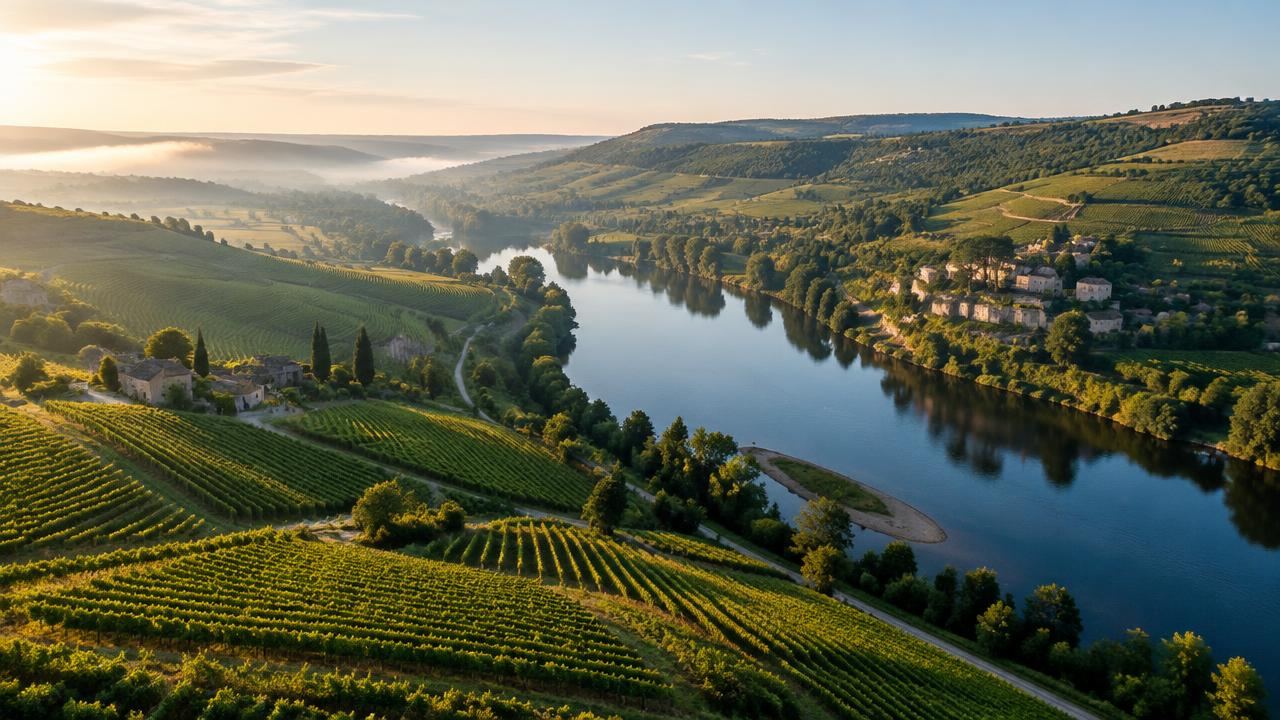
Left Bank Bordeaux is mostly Cabernet Sauvignon grown on gravel, giving firmer, more structured wines that often need time. Right Bank Bordeaux is mostly Merlot (with Cabernet Franc) grown on clay and limestone, giving rounder, softer wines that are often enjoyable sooner. That one sentence will help you read nearly every Bordeaux wine list.
Where the banks are
The Garonne and Dordogne rivers meet north of the city of Bordeaux to form the Gironde estuary.
- Left Bank: West of the Garonne and Gironde. Includes the Médoc, Haut-Médoc, Margaux, Saint-Julien, Pauillac, Saint-Estèphe, Pessac-Léognan, Graves and Sauternes.
- Right Bank: North and east of the Dordogne. Includes Saint-Émilion, Pomerol, Fronsac, Canon-Fronsac, Castillon and others.
Between the two rivers is Entre-Deux-Mers, known especially for fresh white wines.
Why the grapes are different
It comes down to soil. Gravel drains well and holds warmth, which helps Cabernet Sauvignon, a late-ripening grape, fully ripen. Cooler, water-retaining clay suits Merlot, which ripens earlier. Growers planted what worked, and centuries later that pattern defines the styles.
How they taste
Left Bank (Cabernet-led)
- Blackcurrant, cedar, graphite, tobacco
- Firm tannins and noticeable structure
- Often best with five to fifteen years or more of age
Right Bank (Merlot-led)
- Plum, black cherry, cocoa, sometimes truffle
- Softer, rounder texture
- Often approachable earlier, while still able to age
These are tendencies, not rules. Vintage, winemaking and the specific site all matter.
Which to choose with food
- Steak, lamb, rich roasts: Left Bank structure stands up to fat and protein.
- Duck, mushrooms, roast chicken, pork: Right Bank's softness is a natural fit.
- Mixed table or mixed preferences: A Right Bank wine is usually the safer crowd-pleaser.
Which to choose for a cellar
If you want wines that reward patience and are classic collector benchmarks, the Left Bank's classified growths are a traditional backbone. If you want wines you can open over a wider window, including some excellent values, the Right Bank, and especially satellites such as Fronsac and Castillon, are worth a close look. Many well-balanced cellars hold both.
Reading the label
Bordeaux labels name the place, not the grape. So "Pauillac" tells you Cabernet-led; "Pomerol" tells you Merlot-led. Once you know the map, the label tells you the style.
Frequently asked questions
Is one bank better? No. Both produce some of the world's greatest wines. It is a matter of style.
Where does Bordeaux white wine come from? Pessac-Léognan, Graves and Entre-Deux-Mers for dry whites; Sauternes and Barsac for sweet whites.
Is Saint-Émilion Left or Right Bank? Right Bank.
What should a beginner try first? Taste one Margaux and one Saint-Émilion from the same vintage side by side. The difference will be obvious.
Once you know which side of the river a wine comes from, you can predict much of what it will taste like and choose with confidence.